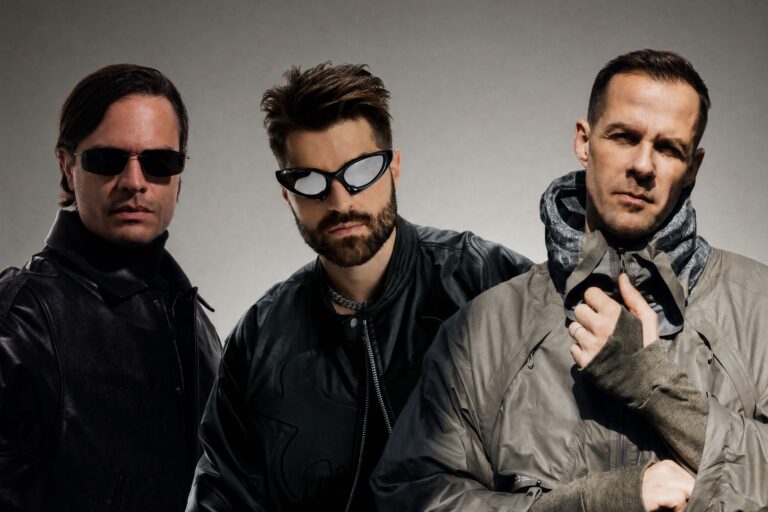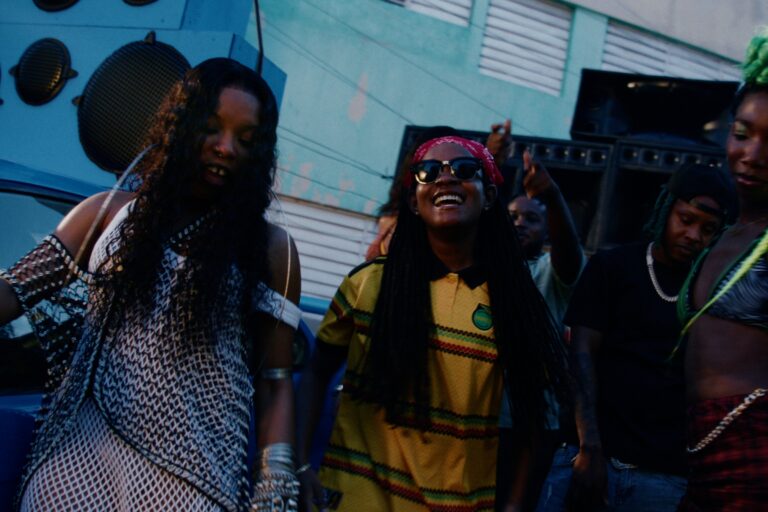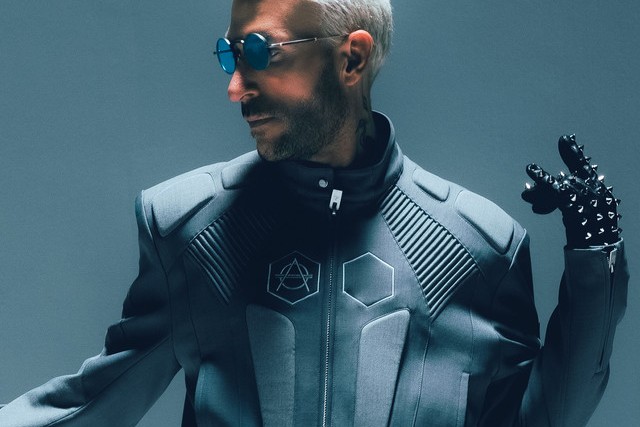
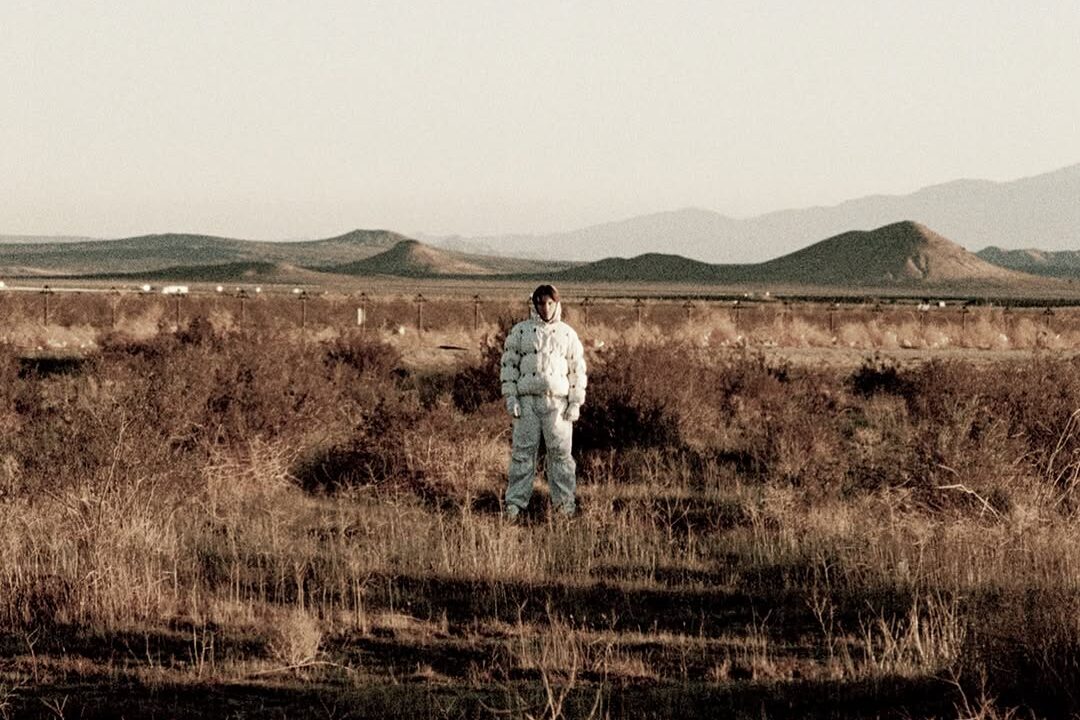
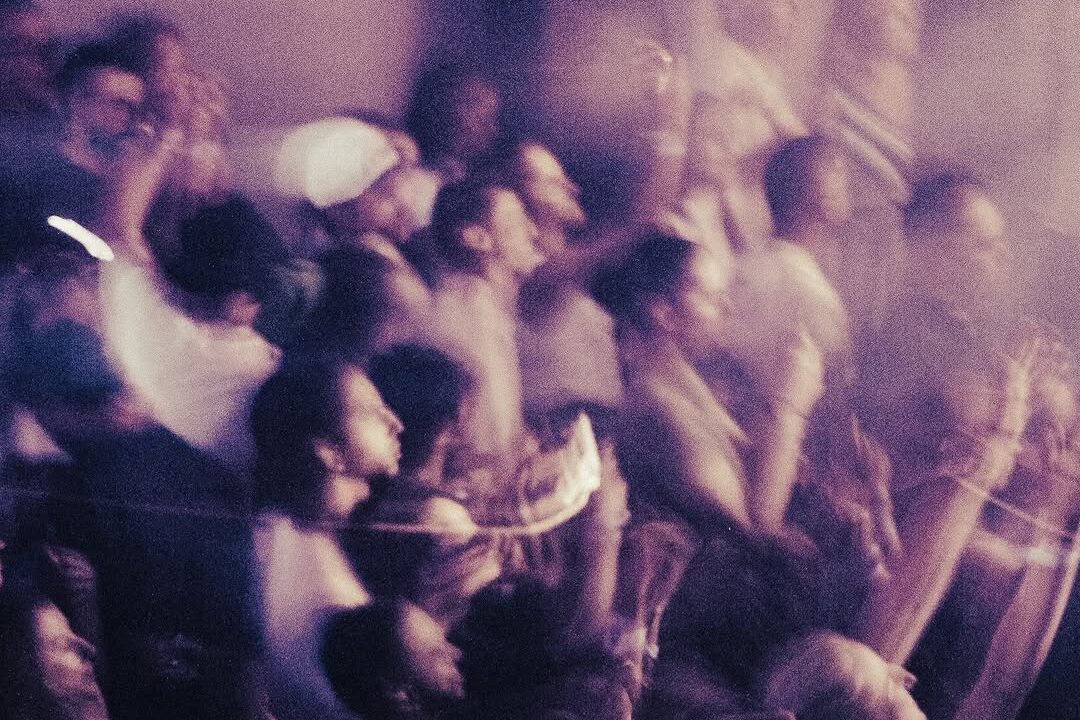
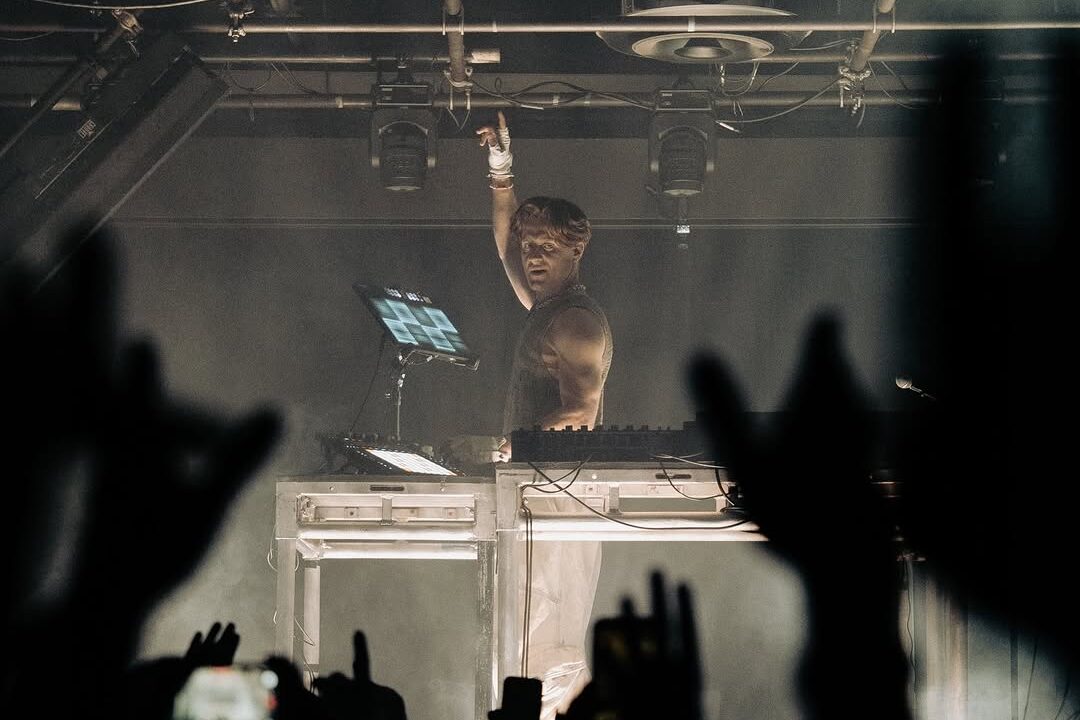
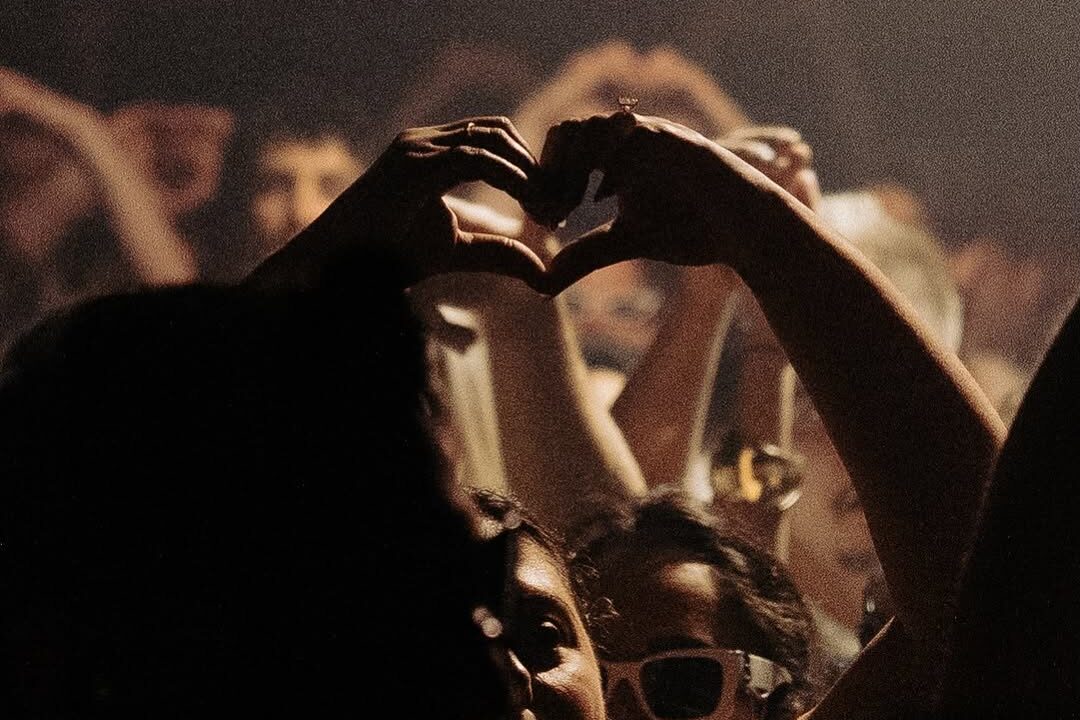
As April came to a close, Aaron Hibell brought his “SYNCHRONICITY” tour to Terminal West in Atlanta, and for a few hours, the room felt suspended somewhere between collective catharsis and a film score unfolding in real time.
Both on record and live, Hibell’s tracks progress with the patience and emotional attunement that have long defined even the most transportive works of cinematic scoring. Beneath driving techno rhythms and high-tempo moments, his defining, gradual builds are masterfully crafted to slowly immerse you inside a particular feeling. Not thinking about what comes next, not reflecting on moments passed – pure presence is the gift of Hibell’s music, only attainable through the patience poured into its creation.
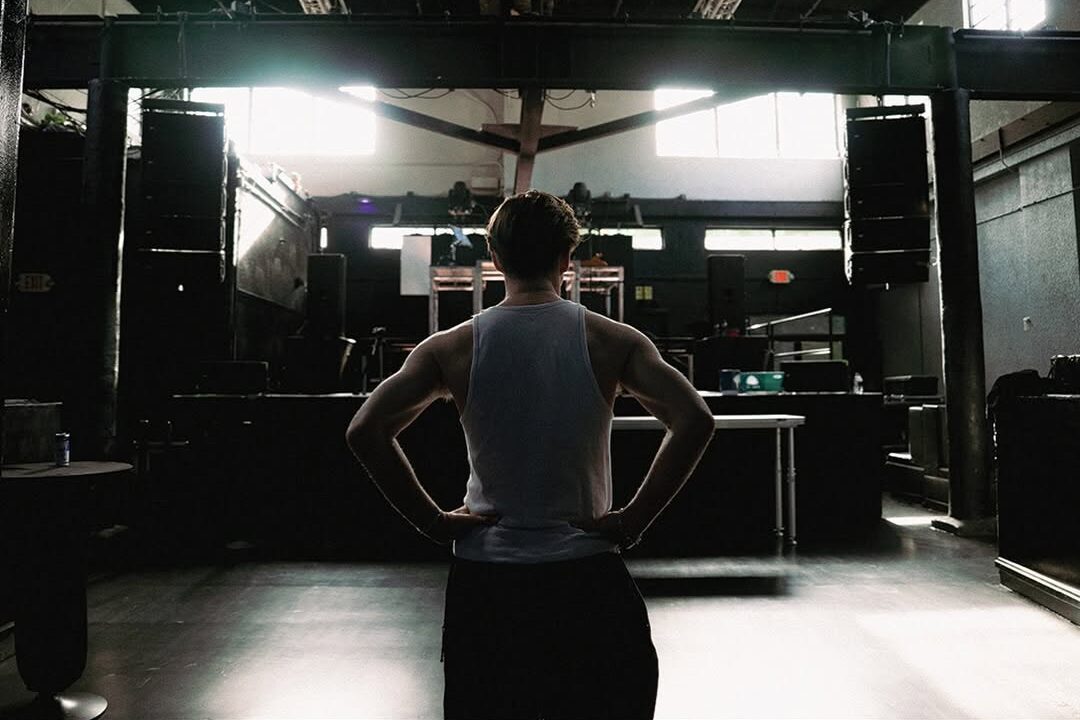
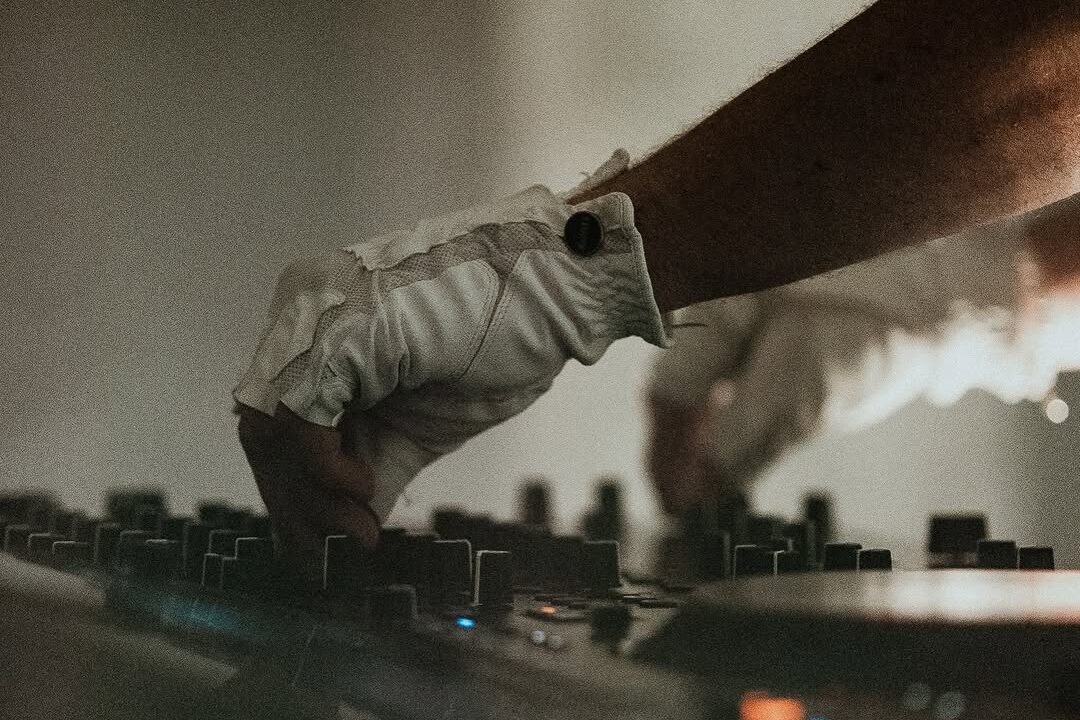
Thoughtful transitions from track to track gave the music space to expand, crest, and dissolve naturally throughout the set. A notable moment was the opening of “I Feel Lost”, played live on a beat pad, which wasn’t included for theatrics. Instead, it served as an intimate invitation for the crowd to connect with the artist on one of the first stops on his North American tour.
Ahead of the show, we sat down with Hibell to talk about “SYNCHRONICITY”: touring, gratitude, and the ineffable process of translating emotion into sound. When speaking with him, the qualities that define his music – patience and presence – felt deeply connected to the way he approaches both music and life itself. It’s an approach that places an emphasis on mindfulness over force, feeling over technique, and the belief that powerful experiences happen when the right state of mind intersects with the right moment, place, or energy surrounding you. Synchronicity, if you will.
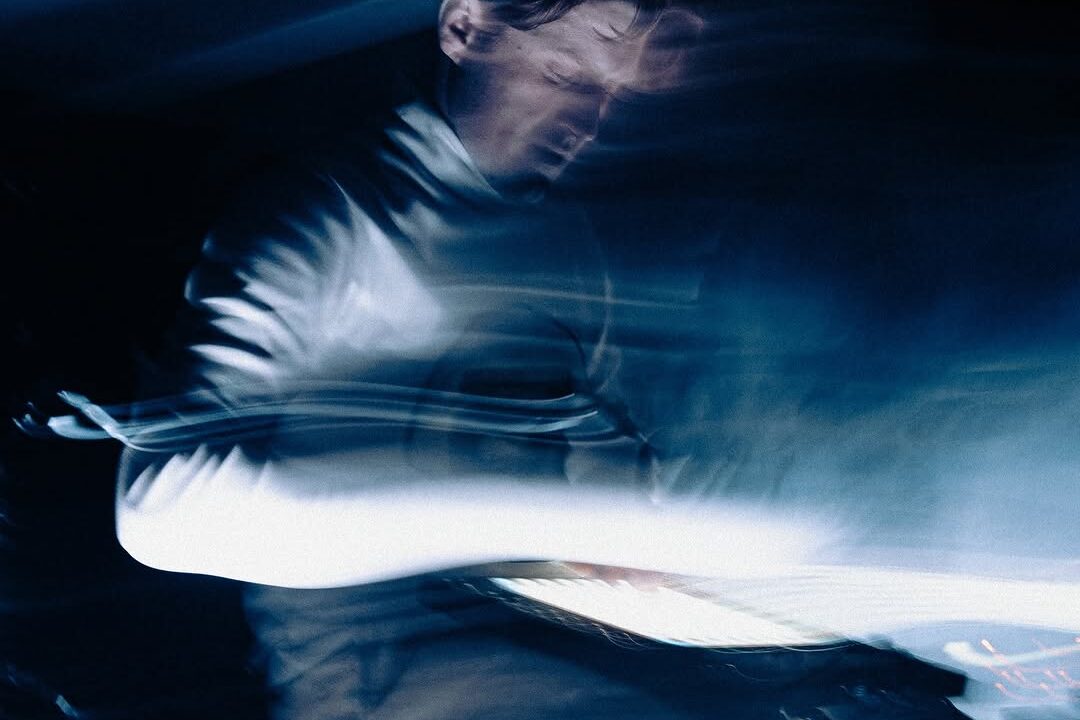
It’s this understanding that sometimes the most immersive moments come not from playing for an audience, but for being with them, providing them with the sound and space to fully feel what’s already there.
I’ve had a few moments myself that have felt like synchronicity. One of which relates directly to this tour. I met Jeff (Kotiēr), in the crowd at Sundream in Cabo, then saw him in the crowd at Cercle Odyssey in Paris when you opened for Ben Böhmer. Now, he’s one of your openers for the North America tour. When I saw that your album name was “SYNCHRONICITY,” it felt perfect for my experience surrounding the music that you’ve created. How do you define “synchronicity”, and what’s one of the most meaningful examples you’ve witnessed firsthand?
How I personally define synchronicity is sort of like unexplained coincidences that seem to appear in your life with seemingly perfect timing. For me, that happened a lot in the process of making this album. This album was made over the process of recording for five years or so. The reason we decided to call it “SYNCHRONICITY” is because everything kind of really fit into place. From starting it to finishing it, all the tracks came from different places, but they all fit together. That’s why I thought it was synchronicity, because I had all these tracks that I made at different points in time and different periods of my life, but they all fit into one body of work.
Do you feel like your pieces are discovered, or are they completely designed, like you know where you’re going from the beginning?
It depends on the song, honestly. The creative process is a funny one. I’ve had songs before where I’ll pretty much be able to finish it in an hour, and it will just come out like a stream of consciousness and then it’ll be done. I had a track called “I Feel Lost,” which happened like that. But then I’ve had plenty of tracks like “SOS”, which has taken years to finish, honestly. So it really does depend on the song for me.
Especially when you’re making emotional cinematic music, in order to get the energy right and the flow of it right, it’s really important to actually make it hit. There’s a lot of cinematic music out there that sounds epic, but it doesn’t tug on your emotions in the right way. When you’re making that, you only have a certain window before you’re tired from listening to a certain part. So you really have to capitalize on that. There are only so many times you can hear it perfectly from start to finish and know exactly when to change a certain chord or those kinds of things. That’s why sometimes it does have that patience.
Do you feel like that patience is something you were born with, or is it something you had to learn?
I think maybe both. I’ve definitely learned to have patience with tracks. Sometimes if I can’t figure a track out, maybe I can figure it out a couple months later or whatever. I feel like sometimes, as creatives, we’re in a place to receive a certain idea at a certain point. If we’re not ready to receive that idea, then it just doesn’t happen. You can’t really force it out. You can try as much as possible, but I think you can really hear when ideas are forced.
When you’re creating cinematic music that brings people into an emotional state, how do you know you’ve found the center of gravity for a song?
I can’t really explain it. It’s just a feeling. You can’t really explain what gives you goosebumps. There are often very specific degrees of separation between what will and what won’t. So it’s all feeling-based for me. Every decision I make production-wise is to do with how it makes me feel in the track.
I feel like production can be split into two different areas, and I’ve noticed a big difference when I work with different producers. I’ve collaborated with people like Sara Landry and various other female producers — some songs haven’t come out yet — but I feel like, generally, female producers are more likely to make decisions on a song based on the feeling and the emotion, which I really like. I think a lot of guys are often too focused on frequencies and kicks. Obviously, frequency is really important because it’s all about how it makes you feel. But I definitely approach music from the perspective of the feeling of it.
Do you think there’s a perfect setting to listen to your music, or is it more about where you are, or the music finding you at the right time?
I think there’s a perfect state of mind and a perfect state of being. I like to think that during my set, I can get you into that state of mind. By the end, you will be in that perfect state to appreciate it. Definitely, things can help, such as a beautiful sunset or good vibes around good people. But I think music is very healing, and it can be used to alter your mood in different ways.
I frequently listen to your recorded set from Bootshaus in Germany, and you had a Lil Uzi Vert remix in there, which was amazing! We’re in Atlanta, so of course we love trap music here. What draws you to reinterpret something like that versus your more cinematic music?
I definitely have a few tracks that are more club-focused. Generally, I was just drawn to the sonics of it: the way he was enunciating his words, the synths and stuff in it. It was just a great vibe. It made you want to go, “Oh, that’s it.” Sometimes that evokes a certain emotion, and sometimes it’s just like, “This is fucking cool. I like it.”
Will we get any of that tonight?
I don’t know. I honestly haven’t even thought about that track since I played it, probably, so maybe. Who knows? We’ll see if we can make it work.
What would you say your musical superpower is?
My musical superpower is being able to make people feel things deeply, making them think about the world and themselves, perhaps.
What’s a song that you would never remix because it feels sacred to you?
The “Interstellar” soundtrack, for sure. I’ve seen people remix it and stuff, and it’s been fun, but for me, I think the emotion it captures is just perfect. I’ve never tried, but I probably wouldn’t want to touch a song like that.
If this was the last set you were ever going to play, would you approach it any differently?
That’s a really good question, actually. I was thinking that during my last set when I played in D.C. a couple nights ago. To be honest with you, I thought, “If this was my last show, how would I want it to go?” I’d want to give it my all. I’ve been thinking about that a lot recently in terms of, “If this was my last show, if this was my last whatever, how would I do it?”
I think being present in everything is so important. The only moment we have is right now. A lot of people, me included, have been living in the future or living in the past. I’m often living in the future, always trying to think so many steps ahead, like, “What’s coming?” That leads to anxiety. If you live in the past, it can lead to depression because you’re reminiscing on past times. Truly, the only moment we actually have is the present. I’ve been trying to make the most of that recently and be as present as possible with the people around me, rather than through a screen. It’s funny — I actually thought about that last show.
Has anything been prompting that introspection for you, or have you just found yourself in that state of mind?
I think a lot of inner peace comes from gratefulness. The more I’ve thought of being grateful for the things around me, the more peace I’ve had. I wanted to try and implement that more in my life, and honestly, it’s made me a lot happier. There have been a lot of times where I’ve been so unbelievably stressed out in my life in the past, and I don’t think it’s been good for me. It made the whole process almost unenjoyable. We don’t get that long with this stuff, so we’ve got to make the most of it and spend it in the present. That’s all I would say.
Do you have any gratitude practices?
I have a few. At the end of the day, sometimes I’ll reflect on things I’m grateful for from that day. Sometimes things will just hit me. Like when I was on stage in D.C. a couple nights ago, I was thinking, “If this was my last set, how would I want to perform it?” And that’s what I did.
Is there anything else you want me to know? Anything else you’re excited about?
I’m excited to be in a lot of places that I’ve never been before, like Atlanta, Georgia. Obviously, we’ve heard so much about it. This is the hip-hop capital of the world. I’m on a U.S. tour at the moment, and I’ve got the opportunity to go to so many different places in the U.S. that I’ve never been before. I think it’s pretty exciting playing for people who have never seen me play live before, who have been following me over the course of maybe four or five years. It’s so cool getting the opportunity to do that and travel around with a great crew. It’s fantastic, and I’m really enjoying it. I can’t wait for future things. I’m already starting to work on new music on the road, so I’m very excited for it.
Aaron Hibell’s work is rooted in the mastery of contrast: control versus surrender, scale versus subtlety, precision versus the ephemeral. “SYNCHRONICITY” captures this contrast beautifully as a project title and as the defining quality of his work — a rare ability to align a state of place, a state of mind, and a state of being into music that doesn’t simply ask to be heard, but to be experienced.
Sending gratitude to Terminal West for their hospitality, to the team at Universal Music Group, and most of all, to Aaron. Thanks for making this fan’s dream come true – fifteen minutes of meaningful conversation followed by an exceptional set (and the inclusion of a much-loved Lil Uzi Vert remix).
Guest interview by Rachel Ford
All photos by Max
About the Author

Discover more from Fist In The Air | Fresh New Music, Daily
Subscribe to get the latest posts sent to your email.